
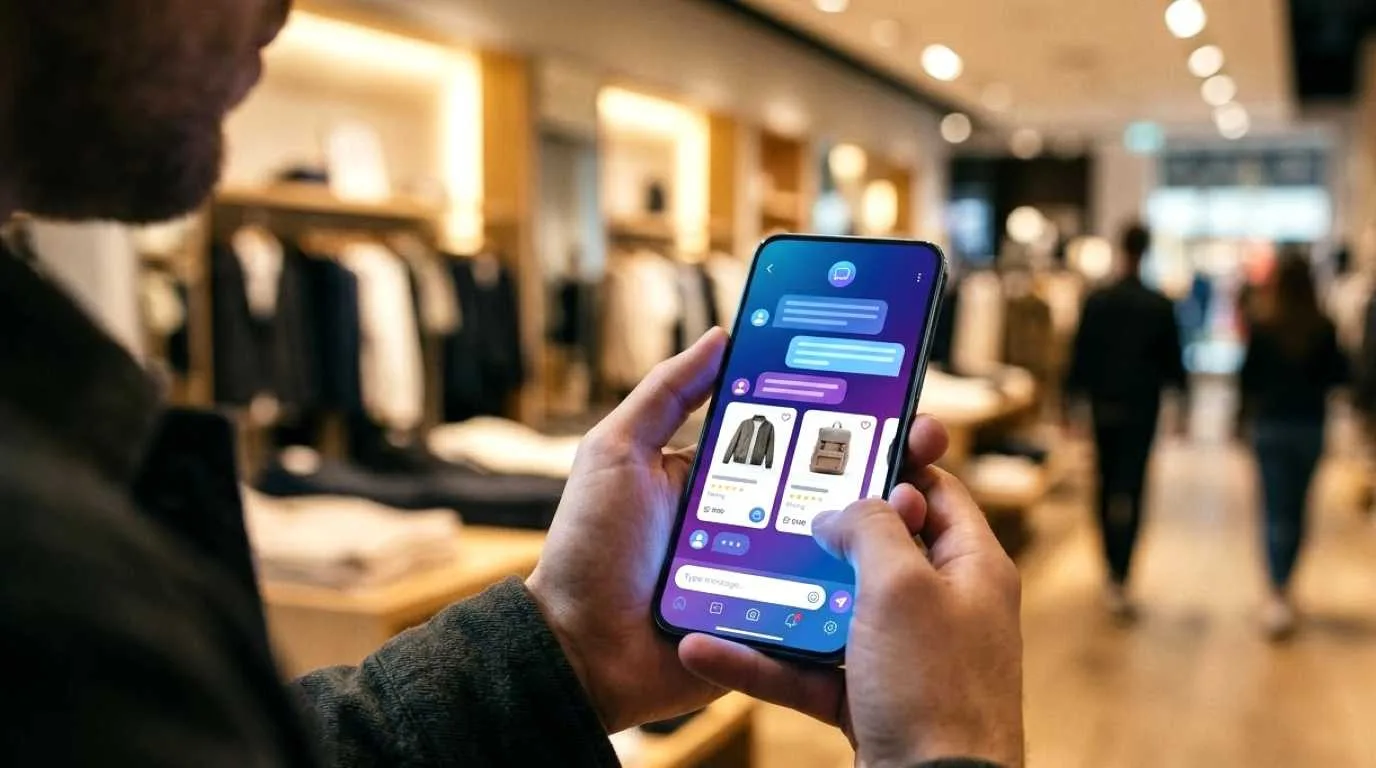
Meta Says Muse Has Over 10 Million Users, With Shopping Emerging as a Top Activity
Meta’s AI ambitions are moving beyond answering questions and generating content. The company’s personal AI assistant, Muse, is attracting millions of users, with shopping emerging as one of the major activities people use it for.
According to reports published in October 2026, Meta says Muse has surpassed 10 million users in the United States and Canada. The milestone highlights how AI assistants are gradually becoming part of everyday activities, including product discovery, shopping research and purchase decisions.
For Meta, this represents an opportunity to connect artificial intelligence with its existing advertising, commerce and social media ecosystem. For online retailers and digital marketers, it could signal a new way customers discover and purchase products.
What Is Meta Muse?
Muse is Meta’s personal AI agent designed to help users complete tasks rather than simply respond to questions. It builds on the company's broader AI strategy, which includes integrating artificial intelligence into its consumer products and digital services.
Traditional chatbots generally respond to prompts with information, recommendations or generated content. An AI agent aims to take the process further by helping users move from an initial request towards a practical outcome.
For example, someone planning to purchase a laptop might ask an AI assistant to compare models, explain the differences between specifications, identify suitable options and help them decide which product best fits their needs.
The objective is to reduce the effort required to move between search engines, shopping websites, product reviews and checkout pages.
The precise capabilities available through Muse may vary by feature, market and rollout stage. Users should check Meta's official product information for the latest supported functions.
Muse Surpasses 10 Million Users
Meta's reported milestone of more than 10 million Muse users in the United States and Canada suggests growing interest in AI-powered assistance.
The achievement is notable because consumer AI products compete not only on the quality of their answers but also on how useful they are in everyday situations.
People may experiment with an AI application because it is new, but continued use depends on whether it saves time, offers relevant recommendations or makes routine tasks easier.
Reports about Muse have also highlighted daily engagement. One reported figure puts daily use at approximately 25%, although the exact measurement and definition of an active user should be checked against the original reporting before drawing comparisons with other AI products.
User numbers alone do not establish whether a product is profitable, whether users remain active over the long term or whether it is more effective than competing services. Nevertheless, the reported adoption provides an indication that Meta is building an audience for its AI assistant.
Why Shopping Is Becoming a Major Use Case
Shopping is a natural fit for AI assistants because it often involves several connected decisions.
A customer may know what they need but still have questions about price, quality, specifications, compatibility and value for money. Answering those questions can require considerable time and research.
An AI assistant can potentially simplify the process by helping users:
-
Discover products based on their needs and preferences.
-
Compare prices, specifications and features.
-
Understand product differences in simple language.
-
Narrow a large selection to a few relevant options.
-
Find alternatives within a budget.
-
Get help navigating the purchase process where supported.
Consider a customer looking for headphones under a particular budget. Instead of opening multiple websites and comparing dozens of products manually, the customer could explain their requirements and ask an assistant to identify suitable options.
The assistant could then help compare battery life, sound quality, comfort and other relevant features. The customer would still need to check the accuracy of the information, the seller's reputation, delivery terms and return policy before purchasing.
Reports have also cited an average purchase value above $200 in connection with Muse shopping activity. This figure should not be interpreted as a universal average for all Muse users or all purchases; its exact scope and calculation need to be confirmed from the original source.
Even with those qualifications, shopping is an important use case for AI because it connects user intent to measurable commercial outcomes.
How AI Agents Could Change Online Shopping
The traditional online shopping journey usually involves several stages: discovering a product, searching for information, comparing alternatives, visiting a retailer's website and completing checkout.
AI assistants could bring more of these stages into a single conversational experience.
1. Product discovery
Customers could describe what they want in natural language rather than relying entirely on keywords and filters.
For example, a customer might ask for a lightweight laptop for office work, video calls and occasional travel. An AI assistant could use those requirements to narrow the available choices.
2. Product comparison
AI could summarise differences between products and explain technical specifications in a more accessible way.
This may be especially useful for categories such as electronics, home appliances and software, where buyers often need to compare several features before deciding.
3. Personalised recommendations
An assistant could tailor recommendations to a user's stated budget, intended use and preferences. Where a product has access to relevant personalisation data, those recommendations may become more specific.
However, personalisation is only valuable when the information used is accurate and the recommendations genuinely serve the customer.
4. Purchase assistance
Where supported, an AI agent may help users move from product selection towards checkout. Meta has also explored shopping experiences involving payment infrastructure, including technology associated with Link by Stripe.
The exact purchasing flow, participating merchants and supported payment options can change. Customers should verify the current availability and terms before relying on any particular feature.
The broader direction is clear: AI companies want their products to help users complete tasks, not simply generate text about them.
What This Means for E-Commerce Businesses
If more customers begin product discovery through AI assistants, e-commerce businesses may need to reconsider how their products are presented online.
Search engine optimisation will remain important, but businesses may also need to make product information easier for AI systems and customers to understand.
Several areas deserve attention.
Accurate product information: Product titles, descriptions, specifications, prices, stock status and return policies should be consistent and regularly updated.
Useful product descriptions: Descriptions should answer real customer questions instead of repeating generic marketing language. Clear information about compatibility, dimensions, materials and intended use can help people make informed decisions.
Structured product data: Appropriate structured data, including product and offer information where applicable, can help search engines interpret product pages. Structured data does not guarantee that an AI assistant will recommend or display a product.
Trust and credibility: Genuine reviews, transparent policies, reliable customer support and clear business information help customers evaluate a seller's credibility.
Mobile-friendly experiences: Product pages and checkout flows should work smoothly across devices, especially as shopping experiences become more conversational and integrated.
Businesses should not assume that optimising for one AI platform will guarantee traffic or sales. A stronger strategy is to maintain accurate information, create genuinely helpful content and provide a reliable purchasing experience across channels.
The Impact on Digital Marketing
AI-assisted shopping could also change how digital marketers think about customer acquisition.
Traditional digital marketing often focuses on attracting visitors through search results, paid advertisements, social media posts and email campaigns. AI assistants introduce another possible point of influence: the recommendation itself.
If a customer asks an assistant to suggest products, the products selected for consideration may influence the customer's final decision.
This creates several questions for marketers. How does an AI assistant select products? Does it rely on product feeds, public information, commercial partnerships or other signals? How are sponsored recommendations identified? Can businesses measure sales that begin with an AI recommendation?
The answers will depend on each platform's systems and policies. Marketers should avoid assuming that AI recommendations work exactly like conventional search rankings or paid advertisements.
For now, businesses can prepare by improving product data, maintaining consistent brand information, answering customer questions clearly and measuring traffic and sales from emerging channels wherever analytics tools permit.
The long-term challenge will be understanding not just where a customer clicks, but how AI influences the decision before that click happens.
How Meta Could Benefit Financially
Shopping activity may create commercial opportunities for Meta beyond its established advertising business.
Potential models include commerce-related fees, commercial partnerships and paid features. However, these possibilities should be distinguished from revenue streams that Meta has officially confirmed.
An AI assistant that influences product discovery or helps complete purchases could become commercially valuable to retailers and platform operators. The business model will depend on how users engage with the service, which merchants participate and how transactions are attributed.
Meta also operates a large advertising ecosystem. Integrating useful AI experiences with commerce could potentially strengthen connections between consumer intent, product recommendations and advertising.
At the same time, monetisation creates a challenge. Users need to understand whether a recommendation is based on their needs, a commercial relationship or a paid placement.
Clear disclosure and relevant recommendations will be important if AI-powered shopping is to earn long-term consumer trust.
Privacy, Accuracy and Consumer Trust
The growing use of AI in shopping raises important questions about privacy and reliability.
Shopping assistants may handle information about budgets, preferences, purchases and other personal choices. Users should understand what information a service collects, how it is used and what controls are available.
AI systems can also make mistakes. They may provide outdated prices, misinterpret product requirements or generate incorrect information about specifications and availability.
Customers should verify important details directly with retailers before purchasing. They should also be careful when sharing payment information, personal documents or other sensitive data with an AI service.
Businesses operating AI shopping tools have their own responsibilities. They need to protect customer information, communicate limitations clearly and provide appropriate ways to resolve problems.
Convenience alone will not be enough to make AI shopping successful. Users must be able to trust the information, recommendations and transaction process.
What Comes Next for AI-Powered Shopping?
Muse's reported user milestone reflects a broader shift in how technology companies are developing consumer AI.
The first wave of popular AI tools focused heavily on answering questions, writing content and generating images. Increasingly, companies are exploring assistants that connect those capabilities to real-world tasks, including planning, product discovery and commerce.
Shopping is a particularly attractive area because customers already need help comparing choices, and successful purchases can create measurable business value.
However, adoption figures are only one part of the story. Long-term success will depend on repeat usage, recommendation quality, reliable transactions, consumer trust and whether these experiences offer meaningful advantages over existing shopping methods.
For online businesses, the sensible response is to prepare for AI-influenced discovery without abandoning established channels. Strong product information, helpful content, trustworthy service and a smooth customer experience remain valuable regardless of where a customer begins their search.
If AI agents become a regular part of the buying journey, the businesses best prepared to answer customer questions clearly and accurately may be better positioned to benefit.
Frequently Asked Questions
What is Meta Muse?
Muse is Meta's personal AI assistant or agent, designed to help users with tasks and practical activities. Its available capabilities depend on the features and markets supported by Meta.
How many users does Meta Muse have?
Reports published in October 2026 say Muse has surpassed 10 million users in the United States and Canada. The precise definition of users and the reporting period should be checked against the original sources.
Why is shopping a major activity on Muse?
Shopping involves product discovery, comparisons, recommendations and purchasing decisions. AI assistants can potentially bring several of these steps into one conversational experience.
Can AI assistants complete purchases?
Some AI-powered shopping experiences are designed to help users move towards checkout or use supported payment integrations. The exact capabilities depend on the platform, merchant and market.
How can online stores prepare for AI-powered shopping?
Businesses should maintain accurate product information, use appropriate structured data, create useful product descriptions, build customer trust and ensure that their websites and checkout experiences work well on mobile devices.
Will AI shopping replace search engines?
Not necessarily. AI assistants may become another way to discover products, but conventional search, marketplaces, social media and retailer websites are likely to remain important channels. The balance will depend on user behaviour and platform development.
Conclusion
Meta Muse's reported growth beyond 10 million users puts a spotlight on the growing relationship between consumer AI and online shopping.
For customers, AI assistants could make product research and comparison easier. For businesses, they may introduce another route through which buyers discover products and make purchasing decisions.
The opportunity is significant, but the outcome is not guaranteed. Accurate information, transparent recommendations, reliable transactions and user trust will determine whether AI-powered shopping becomes a lasting part of e-commerce.
For now, businesses should focus on making their products easier to understand, their information more reliable and their customer experiences more useful. These fundamentals will remain important as AI continues to reshape digital commerce.